
Introduction
You made the sale. You delivered the product or finished the project. On paper, you're profitable. But your bank account tells a different story, because the customer hasn't paid yet.
This gap between earning revenue and collecting cash is one of the most common sources of financial strain for small and growing businesses.
The Federal Reserve found that roughly 80% of small businesses report payment-related challenges, and slow-paying customers rank among the most frequent culprits (2024 Report on Payments).
Accounts receivable is simply the money customers owe you for goods or services already delivered on credit. Accounts receivable management is the system you build to collect that money reliably.
This article covers the full AR process, why it matters, how to improve it, the metrics that reveal problems early, and when it's time to bring in outside help.
Key Takeaways
- AR management spans credit approval, invoicing, collections, cash application, reconciliation, and reporting.
- Disciplined AR processes improve cash-flow visibility and cut overdue balances and disputes.
- Reliable collections depend on aligned policies, accurate records, consistent follow-up, and the right technology.
- Growing businesses often need outsourced controller or advisory support once AR becomes too inconsistent to manage in-house.
What Does Accounts Receivable Management Include?
Accounts receivable management is the coordinated set of policies, procedures, people, and tools a business uses to collect customer balances on time and limit bad-debt risk. It's distinct from the receivable itself, which is just the dollar amount owed sitting on your balance sheet.
Accounts receivable is a number; AR management is the discipline that keeps that number from growing out of control. It sits alongside accounts payable (what you owe others) and cash flow (the actual movement of money), but it has its own dedicated workflow.
Credit Approval and Payment Terms
Before you extend credit, evaluate the customer's ability to pay. Set a credit limit, choose payment terms, document the approval, and decide whether a deposit or milestone payment makes sense for larger contracts.
Many lenders and credit teams use the five Cs of credit as a starting framework:
- Character – repayment track record and credibility
- Capacity – ability to pay based on cash flow
- Capital – financial cushion the customer has invested
- Collateral – assets backing the obligation, if applicable
- Conditions – deal terms plus broader economic factors
These are guideposts, not a substitute for judgment and a written policy.
Invoicing and Documentation
Invoices need to be accurate, prompt, and sent to the right contact, backed by contracts, purchase orders, or delivery confirmations. Common problems that delay payment include:
- Vague line-item descriptions
- Incorrect sales tax treatment
- Missing purchase-order numbers
- Disputed quantities or pricing
- Inconsistent due dates across customers
Collections and Communication
A professional cadence matters more than aggressive tactics. A solid collections workflow typically includes:
- Pre-due reminders before the invoice is due
- Due-date follow-up when payment is expected
- Overdue outreach with clear next steps
- A defined dispute-resolution path
- Payment plans for legitimate hardship cases
- Escalation for seriously delinquent accounts
Cash Application, Reconciliation, and Reporting
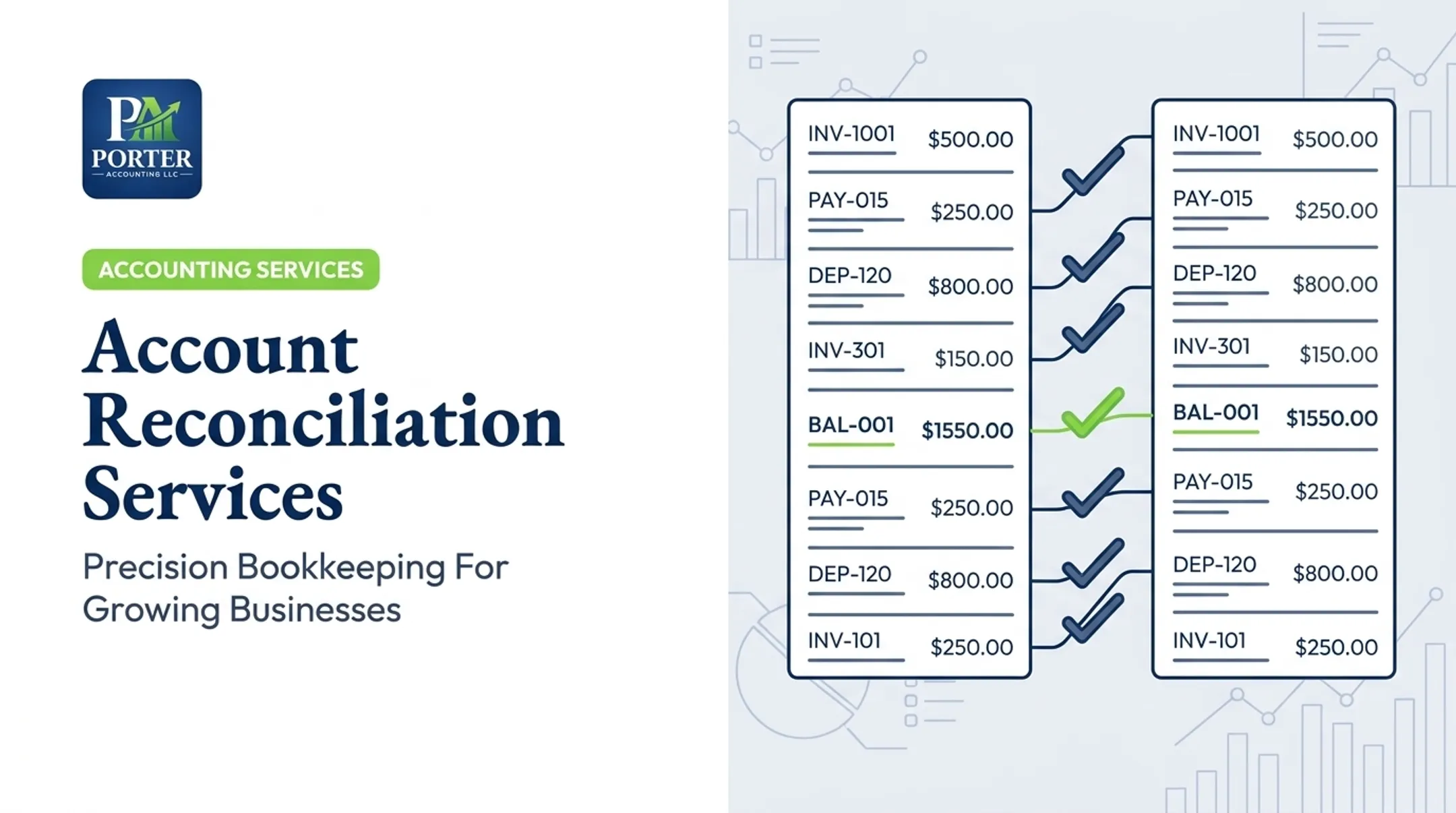
Once payment arrives, match it to the correct invoice. Unapplied cash and short payments need investigation, not a shrug. Then reconcile AR balances against the general ledger and bank activity so your books actually reflect reality.

Why Is Accounts Receivable Management Important?
Revenue on your income statement isn't cash in your bank account. Until the customer pays, that sale is just a promise. Delayed collections can restrict cash for:
- Payroll and hiring
- Vendor payments
- Inventory purchases
- Debt service
That pressure shows up even when sales look strong.
This isn't a small-scale problem. Intuit's 2025 research found that U.S. small businesses carrying overdue invoices were owed more than $17,000 on average, and firms with more overdue invoices reported cash-flow problems at 50%, compared with 34% among firms with fewer late payments (2025 Small Business Late Payments Report). Stronger AR follow-up is one of the clearest ways to close that gap before it hits payroll or vendors.

Cash-Flow Forecasting and Business Decisions
Invoice-level data with realistic expected payment dates lets owners forecast cash from likely collections, not hope. That is the difference between planning a hire six weeks out and scrambling to cover payroll.
Financial Reporting and Risk Reduction
Accurate AR records support:
- Month-end close and aging analysis
- Bad-debt allowance estimates
- Audit readiness
Credit reviews, approval limits, reconciliations, segregation of duties, and documented write-off policies cut errors and collection risk. For clients rebuilding trust in their numbers, Porter Accounting LLC brings that discipline in-house—including Thao Porter’s decade of GAAP reporting and audit-readiness work.
AR, Revenue Recognition, and GAAP Reporting
As billing gets more complex, AR stops being only a collections task and becomes a reporting one. Under ASC 606, an invoice is not the same as revenue: billing a customer in advance creates deferred revenue, while milestone or ramped billing can leave earned revenue sitting as an unbilled receivable or contract asset. GAAP also requires a supportable allowance for credit losses, not just a year-end write-off, and auditors commonly confirm or test receivable balances directly with customers. If your AR aging, billing schedule, and revenue schedule do not agree, GAAP financial statements built on them will not hold up either. Our technical accounting advisory team helps align billing terms with revenue recognition, and our SaaS accounting and ASC 606 guide shows how this works for subscription businesses.
Customer Relationships and Dispute Prevention
Clear invoices and accessible payment information reduce friction before it starts. Prompt dispute handling keeps collection activity professional instead of adversarial, which matters if you want repeat business.
Operational Efficiency and Scalability
Standardized workflows cut down on manual chasing, duplicate effort, and dependence on one employee's memory. That dependence becomes a real liability as transaction volume grows.
How to Improve Accounts Receivable Management
Sending more reminders rarely fixes slow collections on its own. Strong AR management ties policy, process, communication, measurement, and technology into one working system.
Establish Written Policies Before Problems Arise
Document written policies covering:
- Credit approval authority and payment terms
- Late-fee rules (where legally and commercially appropriate)
- Collection ownership and dispute handling
- Write-offs and escalation thresholds
Sales, operations, customer service, and accounting all need the same playbook, or handoffs break down.
Invoice Promptly and Accurately
Send invoices as soon as contractual or delivery requirements are met. Use a standard template with:
- Correct customer name, billing contact, and address
- Clear line-item descriptions and quantities
- Purchase-order or contract reference number
- Payment instructions and accepted methods
- A documented, unambiguous due date
Monitor Aging and Prioritize Follow-Up
Review your accounts receivable aging report by customer, invoice age, balance size, risk level, and dispute status. Set a consistent weekly cadence for active follow-up rather than waiting until month-end to discover a problem.
Make Payment and Communication Easy
Offer multiple payment methods, provide clear remittance instructions, and give customers a named contact for billing questions. Consistent, professional messages should state the amount due and the next action, without sounding like a threat.
Our Collections Support add-on service handles this for clients through reminder emails and phone calls that improve cash flow and reduce overdue receivables without damaging the customer relationship.
Use Technology Carefully
Accounting systems can automate recurring invoices, reminders, approval workflows, payment processing, and aging dashboards. AFP's 2024 research found that firms automating AR processes lowered average DSO from 47 days to 40 days, and 87% reported faster overall processing (AFP, Getting Paid Faster).

But automation can't fix bad inputs. If customer data is wrong, terms are unclear, or nobody owns collections, fix the workflow first. Then automate it.
AR Metrics and Internal Controls
Metrics should be tracked as trends over time, not isolated targets. Chasing a single number can encourage counterproductive collection behavior, like pressuring good customers over minor delays while ignoring bigger risks.
Core AR Performance Measures
| Metric | What it measures | Formula |
|---|---|---|
| Days Sales Outstanding (DSO) | Average days to collect | AR ÷ credit sales × number of days |
| AR Turnover | How often AR converts to cash | Net credit sales ÷ average AR |
| Collection Effectiveness Index (CEI) | Collection quality vs. potential | Complex formula weighing beginning/ending receivables |
| Average Days Delinquent (ADD) | Days invoices run past terms | DSO − Best Possible DSO |
Rising DSO, growing balances in older aging buckets, declining turnover, or increasing unapplied cash usually point to a specific weak spot, whether that's billing accuracy, credit approval, or collections follow-up.
Controls That Support Reliable AR Data
- Customer master-data controls and change approvals
- Credit-limit approvals separate from sales
- Invoice review before it goes out the door
- Segregation of duties between billing, cash application, and write-offs
- Payment application review and reconciliation
- Documented write-off authorization and audit trails
Porter Accounting LLC helps growing businesses strengthen these controls through process improvement and controller-level oversight, so gaps get fixed before they turn into accuracy or fraud risks.
Reporting Cadence and Ownership
Assign a clear owner for AR reporting. Review aging reports on a fixed schedule, not just when cash gets tight, and escalate significant risks to leadership promptly.
When Should a Business Get Outside AR Support?
Outside AR support is worth considering when day-to-day collections start slipping:
- Invoices are frequently late or inaccurate
- Aging reports don't reflect reality
- Collections rely on ad hoc reminders, not a process
- Cash sits unapplied for weeks at a time
- Owners lack confidence in what's actually collectible
Those gaps get harder to ignore as operations grow more complex. Common triggers include:
- Rapid growth or multiple entities
- Subscription or milestone billing
- High transaction volume and frequent disputes
- An ERP transition or upcoming audit prep
- No experienced controller on staff
Porter Accounting LLC helps growing U.S. businesses close these gaps with accounting cleanup, stronger AR and financial processes, cash-flow clarity, and controller or fractional CFO guidance. When receivables feed lender reporting or an upcoming audit, we also prepare the aging, allowance, and reconciliation support your auditors or bank will ask for.
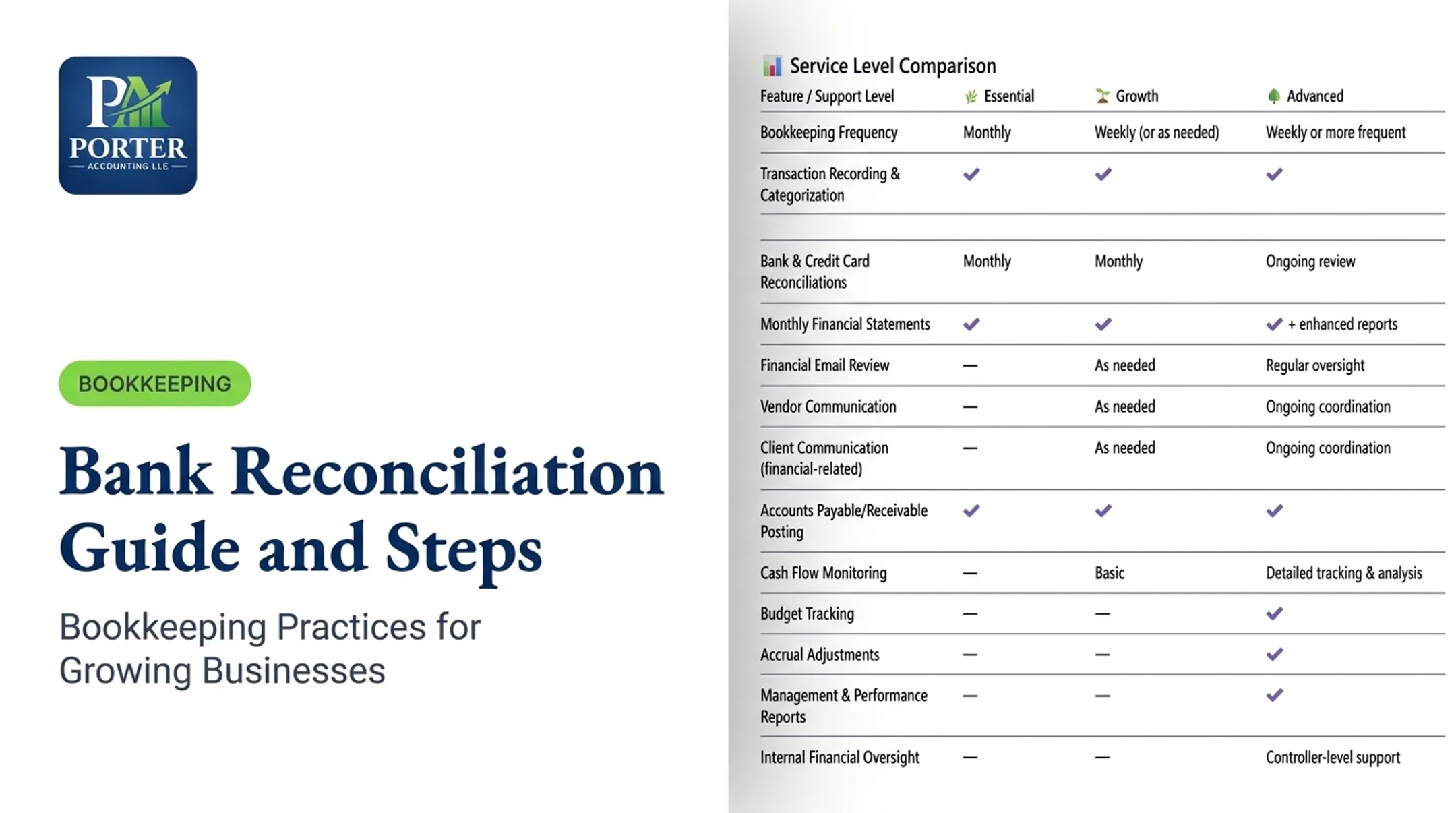
Fractional CFO services start at $150/hour and include cash-flow forecasting and KPI tracking. The Advanced monthly plan, starting at $2,100/month, adds internal-control strengthening and detailed management reporting.
Before you hire an outside provider, vet:
- Accounting expertise and relevant credentials
- Familiarity with your industry
- Experience with your accounting system (QuickBooks, Xero, NetSuite, Acumatica)
- Quality and clarity of financial reporting
- Communication practices and responsiveness
- How they coordinate with your internal staff
Frequently Asked Questions
What is accounts receivable management?
It's the process of controlling customer credit, invoicing, collections, payment application, reconciliation, and reporting so your business gets paid on time and maintains cash-flow visibility.
What is the best way to manage accounts receivable?
Use written credit policies, prompt accurate invoicing, regular aging reviews, and consistent follow-up. Pair those with easy payment options, fast dispute resolution, timely reconciliations, and tools matched to your invoice volume.
Are accounts receivable management services legit?
Yes, legitimate providers offer bookkeeping, invoicing, collections coordination, cash application, reporting, or controller-level support. Verify their scope, credentials, security practices, fees, and references before signing on.
What is accounts receivable control?
AR control refers to the policies and checks used to approve credit, issue accurate invoices, monitor balances, apply cash correctly, authorize adjustments, reconcile accounts, and reduce fraud or error.
How does accounts receivable affect audit readiness?
Receivables are one of the balances auditors test most often. A reconciled aging, documented allowance method, approved write-offs, and billing that ties to revenue recognition make that testing faster and reduce the chance of late adjustments.
What are the 5 C's of accounts receivable management?
The 5 C's are character, capacity, capital, collateral, and conditions. Use them to gauge credit risk before extending terms—they support, but do not replace, a documented credit policy.