
Introduction
Many business owners keep operations running smoothly while their books tell a completely different story. Bank feeds that stopped syncing months ago. A profit-and-loss statement showing a loss when the bank balance clearly grew. Vendor bills marked paid twice — or never paid at all.
These aren't rare problems. They're exactly why bookkeeping cleanup services exist.
A cleanup doesn't just catch up overdue data entry. It reviews what's already recorded, corrects what's wrong, reconciles every account against real bank and processor activity, and rebuilds reports you can actually rely on for taxes, financing, or a sale.
This article covers what triggers a cleanup, what the work involves, what it costs, how to prepare, whether to handle it yourself, and what to look for in a provider.
Key Takeaways
- Cleanup corrects and reconciles existing records, unlike catch-up entry or ongoing monthly maintenance
- Scope depends on how many periods, accounts, and transactions need review, plus documentation quality
- Reliable books support cash-flow visibility, tax coordination, financing, and sound business decisions
- A qualified provider defines scope, deliverables, and unresolved items before work begins
What Is a Bookkeeping Cleanup and When Do You Need One?
A bookkeeping cleanup is a structured review of historical accounting records — correcting errors, reconciling accounts, and reorganizing data so your books reflect what actually happened in the business.
Cleanup vs. Catch-Up, Monthly Bookkeeping, and Tax Prep
These services get mixed up often, but each fixes a different gap. Monaco CPA distinguishes catch-up from cleanup this way:
- Catch-up bookkeeping enters transactions that were never recorded, closing the gap since the last entry
- Cleanup bookkeeping reviews entries that already exist and fixes ones that can't be traced or don't make sense
- Ongoing monthly bookkeeping is the recurring process that keeps clean books clean once cleanup is done
- Tax preparation relies on the numbers your books produce — which only works if those numbers are accurate
Many businesses need catch-up and cleanup at the same time, since missing entries and questionable ones tend to show up in the same file.
What Causes Books to Fall Apart
- A bookkeeper who left mid-year or stopped responding
- An owner handling their own books until it became unmanageable
- Software integrations that stopped syncing
- Personal and business spending mixed in one account
- Inconsistent categorization across different periods
- Reconciliations skipped for months at a stretch
Warning Signs and Common Triggers
- Balance-sheet accounts with balances no one can explain
- Profit that looks unusually high or low relative to actual cash in the bank
- Uncleared deposits sitting for months
- Duplicate transactions from reconnected feeds
- Receivables or payables that don't match what customers or vendors say they owe
Cleanup projects usually start around a concrete deadline or decision:
- Tax season or audit prep
- A loan application or investor conversation
- A sale, restructuring, or new location
- A move to a new accounting system
In every case, the goal is the same: turn historical noise into P&L, balance-sheet, and cash-flow reports that hold up under scrutiny.
What Do Bookkeeping Cleanup Services Include?
Diagnostic Review and Reconciliation
Every cleanup starts with a diagnostic. The provider opens your accounting file, chart of accounts, and prior statements to gauge the backlog and prioritize fixes.
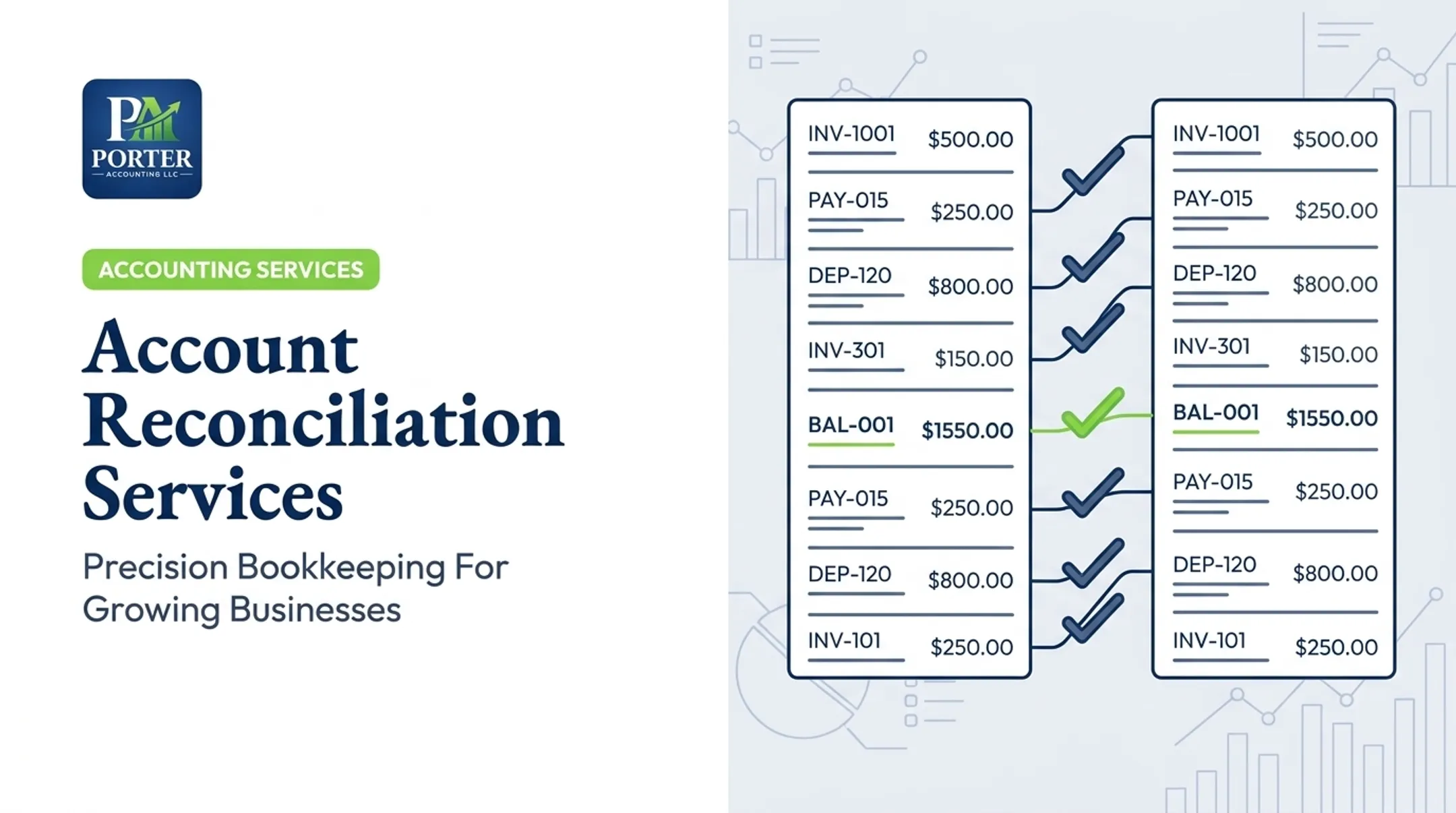
Reconciliation then matches every bank, credit card, payment processor, and loan account against your books, line by line, until each discrepancy is identified and explained.
Common corrections include:
- Duplicate entries from reconnected bank feeds
- Missing transactions never recorded
- Wrong dates, amounts, or account assignments
- Transfers mistakenly booked as income or expenses
- Personal charges mixed into business accounts
- Uncategorized items piling up in an "ask my accountant" bucket
Accounts receivable and payable get the same scrutiny:
- Unapplied customer payments
- Invoices that should have been written off
- Duplicate bills
- Vendor balances that don't match what you actually owe
Some items need a quick client conversation before they can close out.
Industry-Specific Review Areas
The details shift depending on what the business does:
- SaaS and subscription companies: Review revenue recognition under ASC 606 (contract, performance obligations, and transaction price over time) and flag work that needs a full technical accounting assessment.
- E-commerce, CPG, manufacturing, and craft beverage: Tie inventory, COGS, production costs, processor fees, shipping, and shrinkage to true margin—errors here distort profitability.
- Multi-unit franchises: Standardize location-level books, intercompany or owner activity, royalties, payroll, and site-by-site P&Ls so operators can compare locations.
Final Validation and Handoff
A thorough cleanup hands back a usable package, not just a tidier file:
- Corrected financial statements
- Documentation of assumptions and unresolved questions
- Items to route to a tax professional
- Recommended monthly close procedures so the same errors don't return
Porter Accounting's Catch-Up & Clean-Up Bookkeeping service follows this path: review overdue or inaccurate records, correct them, and deliver financials a lender or investor can rely on.

How Much Does Bookkeeping Cleanup Cost and How Long Does It Take?
There's no universal price tag for a cleanup, and any provider quoting one without seeing your books first is guessing. Cleanup is scope-based project work, not routine monthly bookkeeping — the fee should reflect what's actually wrong, not a flat rate.
What Drives the Price
- Number of months or years needing review
- Transaction volume across all accounts
- Number and type of accounts (bank, credit card, processor, loans)
- Missing or incomplete documentation
- Complexity of revenue, expenses, inventory, or payroll
- Number of entities or locations involved
- How severe and widespread the errors are
How Providers Structure Pricing
- Hourly billing — fair when scope is unclear upfront, but harder to budget around
- Fixed project fee after a paid diagnostic — predictable once scope is set, though it adds an initial diagnostic cost
- Defined range with stated assumptions — gives an early ballpark, with change-control terms if new issues surface mid-project
Porter Accounting's Catch-Up & Clean-Up Bookkeeping, for example, is typically priced at 1.5 times the firm's regular monthly bookkeeping rate, which starts at $850/month. The final fee is then adjusted for transaction volume, account count, and payroll complexity once the books are reviewed.
Timeline Factors
How long a cleanup takes depends on several practical factors:
- How quickly you supply statements and answer questions
- Whether prior-year tax returns have already been filed
- Number of accounts and integrations involved
- Complexity of the corrections needed
- Whether cleanup runs alongside ongoing monthly bookkeeping
Before you start, ask for a written scope that covers:
- Periods and accounts included
- Deliverables and your responsibilities
- Estimated timing and fee structure
- How newly discovered issues get handled
Earlier intervention usually means less history to review. Still, no provider can promise a set number of hours or a completion date until they've seen the books.

How Should You Prepare for a Bookkeeping Cleanup?
Documents to Gather
- Accounting software login access
- Bank and credit card statements
- Payment processor reports (Stripe, PayPal, Square, etc.)
- Loan and line-of-credit statements
- Payroll records
- Invoices, bills, and receipts
- Inventory and fixed-asset records
- Prior tax returns and relevant financial policies
Give Context, Not Just Files
A short written summary helps a provider move faster. Cover:
- Revenue streams and payment methods
- Recurring expenses and owner transactions
- Locations, payroll, and inventory
- Unusual events during the period
- Problem areas you already know about
What to Do (and Not Do) Before Hiring Help
Before a cleanup starts, you can safely:
- Organize files and back up your accounting data
- Separate personal from business records
- Flag transactions you can't explain instead of guessing
Don't rewrite historical entries yourself first. Changing prior-period numbers without understanding the reporting and tax impact can create new problems for whoever handles the actual cleanup.
The IRS requires businesses to retain employment tax records for at least four years. General recordkeeping also supports accurate financial statements and tax filings, so keep this documentation organized regardless of who does the cleanup work.
Should You Clean Up the Books Yourself or Hire a Professional?
DIY cleanup can work when the mess is small: a few months of minor miscategorizations, one or two accounts, no payroll or inventory complexity.
Professional help makes more sense when you're facing:
- Multiple unreconciled periods, not just a few weeks
- Payroll or tax filings that may be affected
- Inventory or cost-of-goods-sold questions
- Multiple entities or locations
- Loans, investors, or upcoming financing
- Revenue arrangements more complex than simple point-of-sale transactions

When to Loop in a CPA or Specialist
Some corrections shouldn't happen in isolation. If a cleanup touches previously filed tax returns, payroll filings, sales tax, revenue recognition, or a material balance-sheet account, bring in your CPA, tax preparer, or payroll provider before finalizing anything.
When cleanup work uncovers wage or tax-tracking errors, payroll still has to match the books. Porter Accounting regularly handles that alignment as part of payroll support on cleanup projects.
Revenue recognition questions usually need a specialist rather than a general fix. Thao Porter, MSA, leads ASC 606 and GAAP reporting at the firm.
Getting this wrong isn't just inconvenient. Inaccurate financials can mean incorrect tax filings, misrepresented numbers to a lender, or decisions made on bad information.
After the Cleanup: Controller-Level Close, GAAP, and Audit Readiness
A cleanup fixes the past; it does not stop the same problems from coming back. The businesses that stay clean usually pair ongoing bookkeeping with a fractional controller who runs a monthly close checklist, reviews reconciliations, and posts accruals before statements go out. Cleanups triggered by a loan, investor, or buyer often need one more step: converting cash-basis records to accrual-basis GAAP financial statements, with deferred revenue and ASC 606 schedules where contracts require them. If an audit is ahead, opening balances matter too. A first-year auditor will test the balances your cleanup produced, so reconciliations and adjustment support should be organized as audit-ready workpapers, not just corrected entries.
How to Choose a Bookkeeping Cleanup Provider
What Experience to Look For
Match the provider to your setup before you compare price. Confirm they have handled:
- Your accounting system (QuickBooks, Xero, NetSuite, or Acumatica)
- Your industry's specific quirks
- Your transaction types and entity structure
- Your level of financial complexity
Questions to Ask Before You Sign
- How do you determine scope before quoting a price?
- How do you protect access to our financial data?
- How do you document adjustments and unresolved items?
- How do you communicate open questions during the project?
- How do you validate that reconciliations are actually complete?
- What does the transition to ongoing monthly bookkeeping look like?
Strong answers show a clear method, not vague assurances. Porter Accounting LLC works as a virtual accounting and financial advisory partner for growing businesses across the United States, with appointment-based support around Santa Rosa, San Francisco, and San Jose.
Led by Thao Porter, MSA, the firm has supported companies across SaaS, manufacturing, construction, CPG, retail, and franchise industries. Cleanup work sits alongside GAAP reporting, ASC 606 revenue recognition, ERP implementations, audit readiness, and process improvement.
If your books are unreliable, outdated, or hard to make sense of, Porter Accounting can review your records and help you set the right starting point, whether that is monthly bookkeeping afterward or controller-level close, GAAP reporting, and audit preparation. No set price or timeline is promised until that review happens.

Frequently Asked Questions
How much does bookkeeping cleanup cost?
Cleanup is usually priced as a project. Cost depends on periods to review, transaction volume, account count, documentation quality, and correction complexity. A provider should review your books before quoting a reliable price.
What is a cleanup in bookkeeping?
A cleanup corrects, reconciles, and organizes existing bookkeeping records so your financial statements accurately reflect what actually happened in the business. It's different from entering overdue transactions, which is catch-up bookkeeping.
How long does bookkeeping cleanup take?
Timing varies with the number of periods involved, transaction volume, account complexity, missing documentation, and how quickly you respond to questions. Cleanups needing tax or payroll specialist input can take longer.
Can I clean up my bookkeeping myself?
DIY works for a short period of minor issues in a simple file. Multiple unreconciled periods, payroll, inventory, complex revenue, financing, or tax concerns usually call for professional help.
What records do I need for a bookkeeping cleanup?
Plan on providing:
- Accounting software access, bank and credit card statements, and payment processor reports
- Payroll, loan, invoice, bill, receipt, and inventory records
- Prior tax returns
Is a bookkeeping cleanup enough to prepare for an audit?
It is the first step, but usually not the whole job. An audit also needs accrual-basis GAAP adjustments, documented reconciliations, supporting schedules, and responses to the auditor's request list. Plan cleanup and audit preparation together if an audit is coming.
Will bookkeeping cleanup change my past tax filings?
Corrections sometimes reveal differences from what was previously filed. Your bookkeeper should coordinate with your CPA or tax professional before amending a return or making a tax decision.