
Many businesses struggle with unexplained cash discrepancies, delayed deposits, or a reconciliation that simply won't balance at month-end. Getting this process right protects more than a spreadsheet. It supports accurate cash balances, dependable financial reporting, real cash-flow visibility, faster error and fraud detection, and a cleaner month-end close.
This guide covers what bank reconciliation actually is, why it matters as you scale, the exact steps to follow, where and how often to apply it, and the common issues that trip up even experienced bookkeepers.
Key Takeaways
- Adjusted bank and book balances should match once all reconciling items are identified.
- Treat outstanding checks and deposits in transit as timing gaps; post fees, interest, and errors to the books.
- Run the full cycle: gather records, match items, investigate gaps, post adjustments, and document.
- Set frequency by transaction volume and risk—not only when the statement arrives.
What Is Bank Reconciliation?
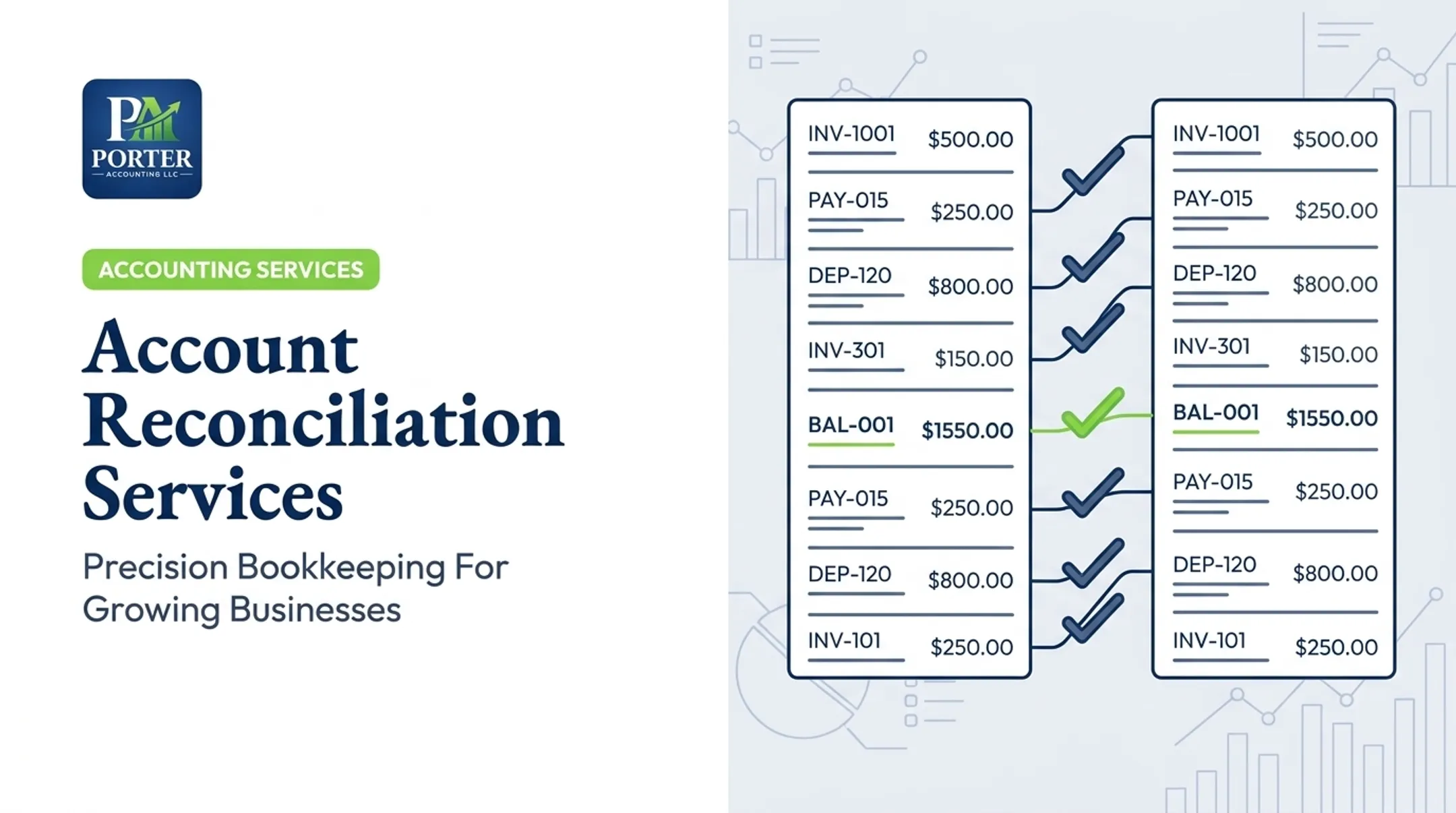
Bank reconciliation is the process of comparing your bank statement to your internal accounting records to confirm both show the same cash position after adjusting for timing differences and errors.
A few terms come up constantly:
- Bank balance: the ending cash balance shown on your bank statement for the period.
- Book balance: the cash balance recorded in your general ledger.
- Bank reconciliation statement: the document showing how the bank balance and book balance were adjusted to reach one agreed, adjusted cash balance.
- Adjusted cash balance: the final number both sides should equal once reconciling items are accounted for.
Reconciliation produces a reliable cash balance in your general ledger. That figure supports your balance sheet, informs cash-flow decisions, and holds up during tax prep or an investor review.
Why Bank and Book Balances Rarely Match Right Away
The bank records a transaction the moment it processes it. Your books might record that same transaction earlier or later, depending on when a check was written, an ACH payment was initiated, or a deposit was made. That timing gap is normal, and it's exactly what reconciliation exists to explain.
Bank reconciliation is narrower than general ledger reconciliation, which covers every balance sheet account. It's also different from reconciling accounts receivable or accounts payable, which focus on customer and vendor balances rather than cash movement. Bank reconciliation stays focused on cash activity tied directly to a bank statement.
The "Put the Item Where It Isn't" Rule
Use this shortcut: put the item on the side where it is missing.
- In your books but not on the bank statement → adjust the bank side (outstanding checks, deposits in transit)
- On the bank statement but not in your books → make a book-side adjustment (bank fees, interest income)
That single rule clears up most confusion about which side an item belongs on.
Why Bank Reconciliation Matters for Growing Businesses
As transaction volume grows, so does the risk of small errors turning into real cash-flow problems. An accurate, reconciled cash balance directly supports:
- Payment scheduling and vendor decisions
- Payroll planning
- Tax preparation
- Budgeting and management reporting
Without it, you're making these calls based on a number that might be wrong.
Reconciliation as an Internal Control
Used as an internal control, reconciliation can flag issues before they escalate:
- Unauthorized transfers
- Altered or duplicate payments
- Missing deposits
- Unexpected fees
- Unusual transactions
The Association of Certified Fraud Examiners' latest global study of occupational fraud found that account reconciliation was the initial detection method in just 5% of cases, compared to 43% detected through tips and 15% through internal audit.
The same research notes that active detection methods—including reconciliation, management review, and monitoring—correlate with lower losses and can uncover fraud roughly four times faster than passive detection methods. Reconciliation may not catch the most fraud cases, but it tends to catch them faster.

What Recurring Reconciling Items Tell You
If the same type of difference shows up month after month, it usually points to a process issue. Common culprits include:
- Delayed deposit recording
- Incomplete transaction coding
- Duplicate entries from bank feed imports
- Weak approval controls
- Disconnected payment platforms feeding data late
A reconciliation statement also creates a documented audit trail, including:
- Period covered and accounts reviewed
- Reconciling items found and adjustments made
- Who prepared it and who reviewed it
- Whether anything remains unresolved
That trail matters during audits, financing conversations, and ownership transitions.
One caution: matching balances alone doesn't prove every dollar was recorded correctly. If cash was never deposited and never booked, both sides can still "match" while missing that revenue entirely. Reconciliation works best paired with solid cash-handling controls, not as a replacement for them.
How Bank Reconciliation Works Step by Step
Before you start, gather what you need:
- The account and cutoff date you're reconciling
- The complete bank statement or transaction export
- General ledger cash activity for the period
- The prior period reconciliation
- Deposit records, check detail, and supporting documents
With everything in hand, work through these steps:
Compare balances and match transactions. Start with the opening and ending balances, then match deposits, checks, card settlements, ACH payments, wires, transfers, fees, and interest line by line. Mark everything that clears, and list anything appearing on only one record.
Investigate and classify each difference. Every unmatched item falls into one of a few buckets: a normal timing difference, an unrecorded bank transaction, a bookkeeping error, a bank error, a returned or reversed payment, or potentially unauthorized activity.
Adjust the bank side. Add deposits in transit, and subtract outstanding checks and confirmed bank errors, from the bank balance. These don't need a journal entry yet because the bank hasn't processed them. Electronic payments create similar timing gaps: Nacha's ACH rules allow ACH credits to settle the same day, the next banking day, or up to two banking days out.
Adjust the book side. Bank fees, interest income, ACH or wire activity, merchant processor deposits, returned checks, and loan activity showing up on the statement but not in your books usually need a journal entry. This is where most of the actual bookkeeping happens.
Correct errors and escalate what needs it. Fix company-side recording mistakes directly. For suspected bank errors or unauthorized transactions, contact the bank and preserve evidence: statements, confirmations, deposit slips, correspondence, and approval records.
Confirm, post, and document. Once the adjusted bank balance equals the adjusted book balance, post the required entries, attach supporting documentation, get it reviewed, and carry unresolved items forward with a named owner and a follow-up date.

Bank and credit card reconciliations are built into Porter Accounting's Monthly Bookkeeping service as a standard part of the monthly close.
Where and When Bank Reconciliation Is Used
Bank reconciliation applies anywhere cash moves through a bank account, including:
- Operating checking accounts
- Payroll accounts
- Savings or reserve accounts
- Credit-card clearing accounts
- Merchant processors and online payment platforms
- Accounts across multi-unit or multi-entity businesses
How Often Should You Reconcile?
There's no single correct frequency. It depends on transaction volume, cash-flow sensitivity, number of accounts, payment complexity, and available accounting resources.
| Frequency | Best fit |
|---|---|
| Monthly | Lower-volume accounts, simple activity, standard month-end close |
| Weekly | Growing businesses with more transactions or tighter cash-flow monitoring |
| Daily | High-risk or high-volume accounts, multiple payment channels, elevated fraud exposure |
A business with one checking account and modest volume may only need monthly reconciliation. A multi-location franchise processing daily card settlements probably needs something closer to weekly or daily review.
Who Prepares and Reviews It
In a small business, a bookkeeper or owner typically prepares the reconciliation. As the business grows, a controller or accounting manager should review the work, and segregation of duties adds another layer of protection.
Outside support tends to make sense when you face:
- A reconciliation backlog
- Repeated unexplained differences
- Cleanup after switching accounting systems
- Multiple entities to track
- Electronic payment activity that has outgrown a spreadsheet
Porter Accounting's Essential, Growth, and Advanced monthly plans start at $850, $1,300, and $2,100 per month and scale reconciliation support with the business. Controller Services at $100/hour add oversight for month-end and year-end close.

Common Issues, Misconceptions, and Limitations
The usual suspects behind a reconciliation that won't balance include:
- Outstanding checks and deposits in transit
- Bank fees and interest
- NSF or returned checks
- Duplicate entries, especially from bank feed re-imports
- Transposition errors
- Omitted transactions
- Stale checks
- Electronic transfers recorded in the wrong period
Misconceptions Worth Clearing Up
Not every difference is an error; some are simply timing. The bank statement also isn't automatically your company's final accounting record; it's one input into it. And a balanced reconciliation doesn't independently prove no cash was stolen or omitted before it ever made it to the bank.
On stale checks specifically: under the Uniform Commercial Code, a bank isn't obligated to pay a check, other than a certified check, presented more than six months after its date, though it may still pay it in good faith. A stale check doesn't automatically vanish from your outstanding list on its own.
Troubleshooting a Reconciliation That Won't Balance
- Verify the statement period and opening balance match your books before hunting line items.
- Check for transposed digits or sign errors—$1,230 vs. $1,320 is a classic $90 gap.
- Confirm every transaction was actually reviewed, not skimmed past in the feed.
- Search for duplicates or omissions, especially after bank-feed re-imports.
- Inspect prior-period outstanding items still lingering on the reconciling list.
- Investigate unusual transactions directly with source documents or the bank.
High transaction volume, numerous accounts, multi-entity activity, or frequent processor settlements can make manual reconciliation slow and error-prone. Software or experienced accounting support reduces the manual load, but it doesn't replace review and judgment.
Quality safeguards worth building in:
- Consistent cutoff dates
- Documented preparer and reviewer
- Restricted access to banking credentials
- Retained supporting documentation
- Timely escalation of suspicious activity
- Follow-up on aged reconciling items
When historical reconciling items have piled up, that cleanup is the kind of work Porter Accounting handles regularly—clearing issues that built up long before a formal review.
From Bank Reconciliation to Controller-Level Close
A clean bank reconciliation is the first box checked in a real month-end close, not the last. Once cash ties out, a controller or fractional controller reviews it alongside accruals, prepaids, payables, and deferred revenue before the month's statements are released. At year-end the stakes rise: auditors usually ask for the December bank reconciliation, trace outstanding checks and deposits in transit to January statements, and confirm balances directly with the bank, so stale reconciling items become audit findings. Reconciled cash is also the starting point for forward-looking work like a 13-week cash flow forecast or the planning a fractional CFO builds on top of it. If an audit or lender review is coming, our audit readiness support starts by clearing exactly these items.
Conclusion
Bank reconciliation is a repeatable control you run on a set schedule. It compares bank activity with book activity, explains the differences, records the necessary adjustments, and validates the cash balance your business actually relies on.
A reliable process usually includes:
- Consistent, documented steps each period
- Review by someone other than the preparer when possible
- Depth scaled to your transaction volume and risk
- Timing tied to your close calendar, not statement arrival
If reconciliations have piled up, keep coming out wrong, or your team has outgrown a spreadsheet, Porter Accounting LLC works as a virtual accounting and advisory partner for growing US businesses that need more than basic bookkeeping. From catch-up cleanup to monthly reconciliations to controller-level oversight, GAAP reporting, audit readiness, and fractional CFO guidance, the goal stays the same: numbers you can trust and actually use.
Frequently Asked Questions
What is meant by bank reconciliation?
Bank reconciliation is the process of comparing your bank statement to your internal cash records to identify differences between the two. Once reconciling items like outstanding checks or bank fees are found, the adjusted bank and book balances should agree.
What are the three methods of a bank reconciliation?
Most teams use one of three approaches: manual line-by-line comparison, a spreadsheet that tracks reconciling items, or accounting software that matches bank-feed transactions automatically. The right fit depends on transaction volume and account complexity.
What is a monthly reconciliation?
A monthly reconciliation compares all transactions for a defined month against the bank statement or cutoff period for that month. You record adjustments and keep the documentation for review or audit.
Who will prepare a bank reconciliation statement?
A bookkeeper, accountant, business owner, or accounting clerk typically prepares the reconciliation. Where staffing allows, a controller, manager, or independent reviewer should review it before it's finalized.
Why do auditors ask for the year-end bank reconciliation?
Cash is usually the first balance auditors test. They compare the year-end reconciliation to the bank statement and confirmation, then check that outstanding items cleared in the following month. An old or unexplained reconciling item can signal a cutoff error or a control gap.
What is the difference between bank reconciliation and book reconciliation?
Bank reconciliation compares the bank statement to the books and identifies timing differences on the bank side. Book reconciliation means correcting and updating the company's own records, such as posting fees or interest, and both are part of completing the process.
What is an example of reconciliation?
Say your book balance is $10,000 but the bank shows $9,800. A $400 deposit in transit, a $300 outstanding check, and an unrecorded $100 bank fee explain the gap and bring both adjusted balances to $9,900.